A greasy frying pan comes clean in a minute. A mixing bowl with a ring of dried dough can survive a soak, a scrub and a second soak. It is not that dough is dirtier. It is a different kind of mess, and the usual tools are aimed at the wrong target.
Here is what happens to dough as it dries, and why each of the normal fixes struggles.
Flour paste is literally glue
Mix flour and water and you have made one of the oldest adhesives there is. Flour paste has been used for wallpaper, papier-mâché and bookbinding for centuries, and paper conservators still use wheat starch paste today. Starch sticks things together very well, especially once it dries.
Your bowl gets the same treatment. Dough left on a surface is a thin layer of starch and gluten that sets into a hard film as it dries.
What happens as dough dries
Fresh dough is soft because it is full of water. As that water evaporates, the starch and gluten shrink down onto the surface and pack tightly together. The gluten network, which was stretchy and elastic, becomes a tough, papery skin.
That skin also works its way into texture. Fine scratches in a plastic tub, the grain of a wooden bench, the seams of a dough hook. Every one of them gives the dried dough something to hold on to, which is why worn equipment is harder to clean than new.
Why soap does not shift it
Dish soap is very good at one job: grabbing fat and oil so water can rinse them away. Lean dough has almost no fat in it. It is mostly starch, held together by protein, and soap does not break either of those down. It can help wash away dough that has already softened, but it is not what loosens it. We compare soap, vinegar and enzymes side by side in Enzyme Cleaner vs Dish Soap vs Vinegar for Dried Dough.
Why hot water can make it worse
It feels logical to reach for the hottest water you have. With dough, it often backfires. Wheat starch starts to gelatinise at around 55 to 65°C, which means it swells, turns gummy and gets even stickier. Very hot water can also firm up the gluten proteins. Instead of rinsing away, the dough becomes a gluey layer that smears around the bowl.
Warm water is the sweet spot. It softens and rehydrates dried dough without turning it into paste.
Why scrubbing feels endless
Scrubbing removes dough by force, one layer at a time. Because the dried film is tough and anchored in every scratch, it takes real effort, and it adds new scratches as it goes. Those scratches give the next batch of dough even more to grip, so the job gets a little harder every time.
Why soaking only half works
A long soak lets water seep back into the dried dough so it softens. That does help, which is why the overnight soak is so popular. But water only softens the residue. It does not break it apart, so you are still left wiping and scraping, just with less effort and a lot more waiting.
What actually makes it easy
The residue is starch and protein, so the fastest fix is something that breaks starch and protein down. That is the job of enzymes. Amylase takes apart starch, and protease takes apart protein, including gluten. Once the film loses its structure, it lets go of the surface and rinses away instead of needing to be scraped. We go through the options in What Ingredients Can Break Down Dough?
That is what After Dough is built around. A couple of pumps in warm water, about ten minutes, then rinse.
What not to do
- Do not use boiling water on dried dough. It can turn the starch gummy and spread the mess.
- Do not reach for a metal scourer. Scratches make the next batch stick harder.
- Do not leave it for later if you can help it. Dough that has dried for a day is far tougher than dough that has dried for an hour.
- Do not tip dough scrapings down the sink. Dough swells in water and blocks drains. Bin it.
Frequently asked questions
Why does dried dough stick so hard?
As dough dries, its starch and gluten shrink into a tough film that grips the surface and any scratches in it. Flour and water paste has been used as glue for centuries for the same reason.
Should I use hot or cold water to clean dough?
Warm water. Cold water softens dried dough slowly, and very hot water can make the starch gummy and sticky.
Why doesn't dish soap get dough off?
Soap is designed to remove fat and oil. Dough is mostly starch and protein, so soap helps rinse away dough that has already softened but does not break it down.
What is the easiest way to clean stuck-on dough?
Soften it with warm water, then use something that breaks down starch and protein, such as an enzyme cleaner, so it rinses off without scrubbing.
Less scrubbing, more baking. After Dough is a plant-based enzyme cleaner that breaks dried dough down so it rinses away.
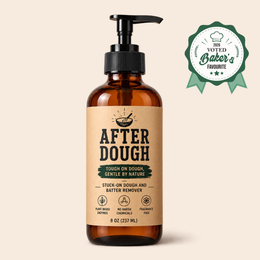
AFTER DOUGH
A plant-based enzyme cleaner that dissolves dried dough so you can stop scrubbing.
Bake more. Scrub less.
After Dough is the plant-based enzyme cleaner built for sticky dough. Skip the overnight soak and let the formula do the work.
Try After Dough